
Mastering Core Web Vitals: The New Frontier of SEO
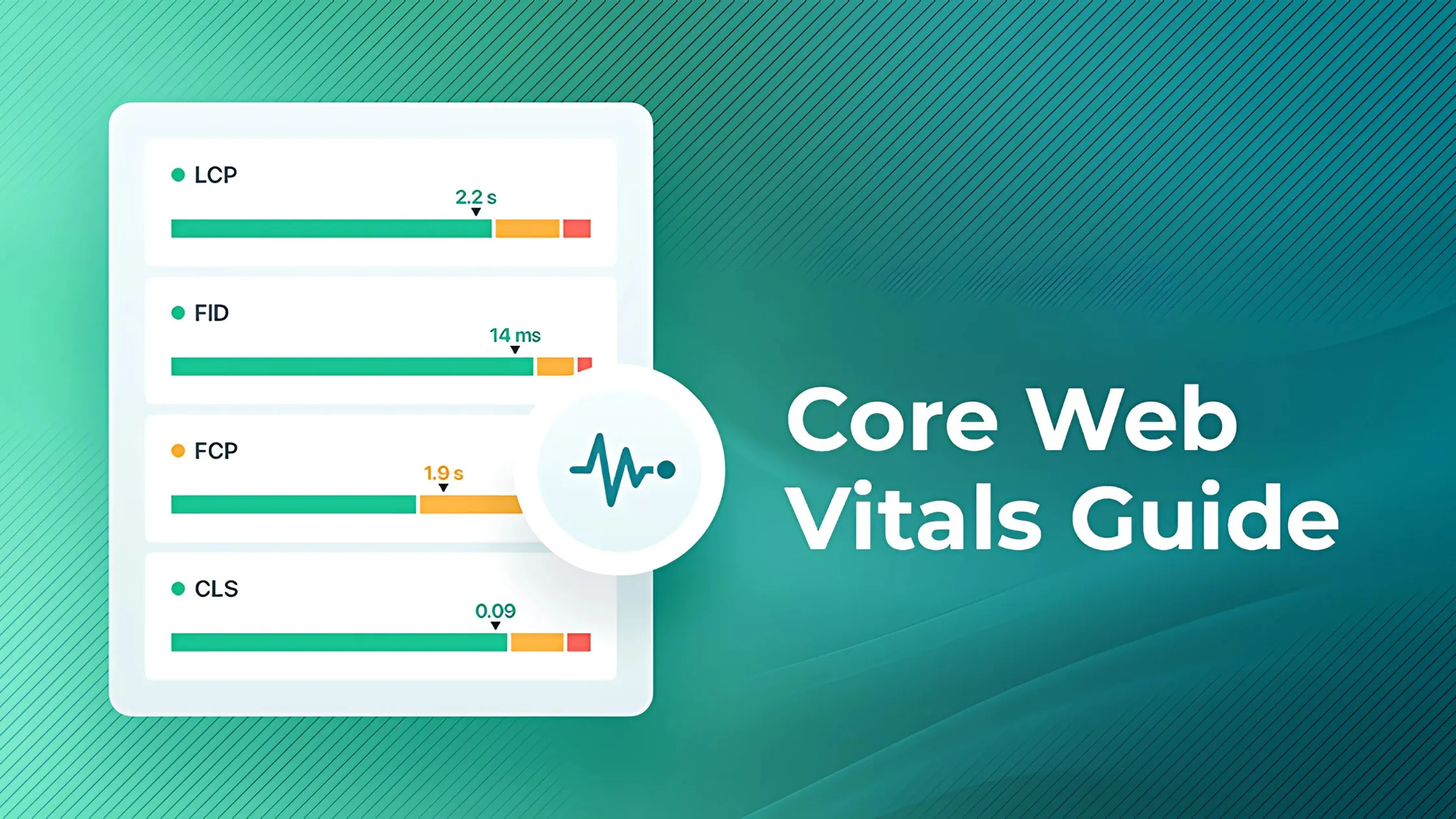
Go beyond keywords. In today’s digital landscape, user experience is a direct ranking factor. We’ll break down Google’s Core Web Vitals and provide actionable steps to make your website faster, more responsive, and SEO-friendly.
On this page
What Exactly Are Core Web Vitals?
Core Web Vitals (CWV) are a specific set of metrics that Google considers crucial for a webpage’s overall user experience. They aren’t just abstract concepts; they are tangible, measurable indicators of how a user perceives the experience of interacting with a web page. Think of them as the technical foundation for a positive user journey. Google introduced these to provide a unified set of signals that are essential to delivering a great user experience on the web. The goal is to simplify the complex landscape of performance metrics and help site owners focus on the aspects that matter most: loading performance, interactivity, and visual stability.
These vitals are a subset of the wider range of “Web Vitals” and apply to all web pages. They are designed to be measured by all site owners and will be surfaced across all Google tools. Each of the Core Web Vitals represents a distinct facet of the user experience, is measurable in the field, and reflects the real-world experience of a user. By focusing on these three key areas, you’re not just pleasing a search engine algorithm; you’re fundamentally improving the quality of your website for every single visitor, which can lead to higher engagement, better conversion rates, and increased user satisfaction.
Why Core Web Vitals are a Game-Changer for SEO
The integration of Core Web Vitals into Google’s ranking algorithm marks a significant shift in the world of SEO. For years, technical SEO focused on elements like sitemaps, robots.txt, and structured data. While those are still vital, the Page Experience update has elevated user-centric performance metrics to a direct ranking factor. This means a website that is technically sound but slow and clunky to use will likely be outranked by a competitor with a smoother, faster experience, even if their content is of similar quality. Google is explicitly stating that the quality of the user experience is as important as the quality of the information on the page.
This has profound implications. It forces a closer collaboration between SEO professionals, designers, and developers. SEO is no longer just about content and links; it’s about the holistic performance of the website. A poor CWV score can directly harm your visibility in search results, leading to less organic traffic. Conversely, a strong score can give you a competitive edge. Furthermore, these metrics impact more than just rankings. A fast-loading, stable, and responsive site naturally leads to lower bounce rates, longer session durations, and higher conversion rates. Users are less likely to abandon a page that loads quickly and doesn’t have elements jumping around as they try to interact with it. In essence, optimising for Core Web Vitals is optimising for your users, and in doing so, you are also optimising for Google.
The Three Pillars of Page Experience
To truly master Core Web Vitals, you need to understand each of its three core components. Let’s break them down.
LCP: The Loading Metric
Largest Contentful Paint measures the time it takes for the largest single element (like an image or a block of text) to become visible within the viewport. It’s a direct indicator of perceived loading speed. If your main banner image or the first big chunk of text takes too long to appear, users might assume your site is slow or broken and leave. A good LCP score reassures the user that the page is actually loading and useful content is on its way. Unlike other loading metrics that might measure the first pixel of colour, LCP focuses on what’s most meaningful to the user’s perception of speed.
FID: The Interactivity Metric
First Input Delay measures the time from when a user first interacts with your page (e.g., clicks a button or a link) to the time when the browser is actually able to respond to that interaction. It quantifies the user’s first impression of your site’s responsiveness. A long delay can be incredibly frustrating, making a site feel sluggish and unresponsive. This is often caused by the browser being busy executing other scripts in the background. A low FID is crucial for pages that require user input, ensuring that when a user takes an action, they get immediate feedback, creating a smooth and seamless experience.
CLS: The Visual Stability Metric
Cumulative Layout Shift measures the visual stability of a page. It quantifies how much unexpected movement of visible elements occurs during the entire lifespan of the page. Have you ever tried to click a button, only for an ad to load above it and push the button down, causing you to click the ad instead? That’s a layout shift, and it’s a major source of user frustration. CLS helps you identify and fix these issues. A low CLS score ensures that the page layout remains stable as it loads, providing a predictable and non-disruptive experience for the user. This is often caused by images without dimensions, or ads and embeds that resize themselves after the initial page render.
How to Measure Your Vitals
You can’t improve what you don’t measure. Fortunately, Google provides a suite of tools to analyse your Core Web Vitals. These tools are divided into two categories: Lab data and Field data. Lab data is collected in a controlled environment, which is great for debugging. Field data (also known as Real User Monitoring or RUM) is collected from actual users visiting your site, providing a more accurate picture of real-world performance. A combination of both is ideal for a comprehensive optimisation strategy.
Key Measurement Tools:
- PageSpeed Insights: Combines both lab and field data for a specific URL.
- Google Search Console: Shows field data performance site-wide.
- Lighthouse: Automated tool built into Chrome DevTools for lab tests.
- Chrome DevTools: Use the Performance and Rendering tabs for debugging.
Your Actionable Improvement Checklist
Understanding the metrics is the first step. The next is implementation. Here’s a checklist of common optimisations you can make to improve your Core Web Vitals scores. Click on each item to learn more.
Large images are a primary cause of slow LCP. Compress your images without sacrificing too much quality, use modern image formats like WebP, and implement lazy loading for images that are below the fold. Most importantly, always specify image dimensions (width and height attributes) in your HTML to prevent layout shifts as they load.
A slow server directly impacts LCP and every other metric. Optimise your server, upgrade your hosting plan, use a Content Delivery Network (CDN) to distribute your content closer to users, and implement caching to serve static content faster. A server that responds quickly is the bedrock of a fast website.
Heavy JavaScript execution is the main culprit for poor FID. Minify and compress your JS files, remove any unused code, and defer the loading of non-critical JavaScript using the defer or async attributes. This allows the browser to render the page and become interactive much sooner, without waiting for every script to download and execute.
To combat CLS, always reserve space for any content that loads late. This includes ads, iframes, and dynamic content. You can do this by setting a fixed size on the container element. For example, if you know an ad banner is 300x250 pixels, create a div with those dimensions so that when the ad loads, it doesn’t push other content down the page.