Digital Marketing for Adelaide Businesses: A Practical Guide
If you run a business in Adelaide, the honest starting point is this: the state’s business conditions are genuinely strong right now, but its population is barely growing. That combination changes how digital marketing should work here. You are not catching a wave of new residents the way a business in Perth or Brisbane might; you are competing for a largely fixed pool of customers who, in a lot of cases, already have a usual supplier. This guide covers what the current data actually says about Adelaide’s market and a practical approach to marketing a business here that accounts for it, rather than copying a strategy built for a faster-growing city. For the full service breakdown, our digital marketing in Adelaide page covers how we approach the market.
The good news: Adelaide’s business conditions are strong
Heading into 2026, South Australia topped the ANZ Stateometer, the index that tracks business conditions across every Australian state and territory, on the back of the strongest rise in business conditions of any jurisdiction, according to the Department of State Development. The state government also reports that more than 16,200 small business owners have engaged with its Small Business Strategy 2023-2030 since it launched, a practical sign that small business formation and support in SA is active, not stagnant.
That matters for how you read everything else in this guide. Adelaide is not a market to avoid. It is a market where the fundamentals (costs, conditions, government support) are genuinely favourable for running a business. The catch is on the demand side, not the business-conditions side.
The catch: Adelaide’s population isn’t growing much
South Australia’s Estimated Resident Population rose by just 1.0%, or 19,700 people, to 1,910,600 in the year to the December 2025 quarter, according to the SA Treasury’s own population estimates. The federal government’s 2025 Population Statement is more cautious again, projecting South Australia as the second-slowest growing state or territory over the next decade, with growth expected to fall below 1% a year. Adelaide itself holds around 79% of the state’s population, so what happens to the state figure is largely what happens to the city.
Compare that with Perth or Brisbane, both of which are adding tens of thousands of residents a year on the back of strong interstate and overseas migration. In those cities, a meaningful slice of local search demand comes from people who have just arrived and have no established supplier yet, which is exactly the audience local SEO is best at capturing cheaply. Adelaide does not have that same inflow of brand-new searchers at the same scale. Most of the people searching for what you offer already have a usual plumber, a usual dentist, a usual marketing agency.
This is not a reason to write off Adelaide. It is a reason to market differently here than you would in a growth city.
What slow growth actually means for your strategy
In a fast-growing market, a reasonable chunk of your digital marketing job is demand capture: be visible when a new resident searches for your category for the first time. In a flat-population market like Adelaide, the job shifts toward share capture: winning customers away from whoever they already use, or being the business someone finally switches to when their current supplier lets them down.
That shift changes what you should prioritise:
- Reviews and reputation carry more weight. When most searchers already have an option, the deciding factor is usually trust, not discovery. A thin or outdated Google Business Profile is a bigger liability in Adelaide than in a city full of people choosing for the first time.
- Local specificity beats broad visibility. You do not need to be visible to all of Adelaide. You need to dominate your particular suburb, niche and service category so thoroughly that switching to you feels obvious.
- Retention-adjacent content matters. Content that builds ongoing trust (case studies, FAQs, clear pricing drivers, genuine expertise) does more work in a market where the buying decision is “should I switch” rather than “who do I pick”.
- Paid search still works, but the ceiling is lower. Google Ads remains the fastest way to get in front of someone actively searching, but with a smaller, slower-growing pool of searchers than Sydney or Melbourne, expect your addressable audience, and therefore your realistic scale, to be smaller too. That is not a reason to skip it; it is a reason to run it tightly rather than broadly.
A practical channel order for an Adelaide business
If you are building from close to scratch, this is a sensible sequence for a market like Adelaide’s rather than trying to do everything at once:
- Fix the trust signals first. A fully completed, accurately categorised Google Business Profile and a genuine, ongoing flow of reviews matter more here than in a market where novelty alone gets you noticed. This is the single highest-leverage move in a reputation-driven market.
- Build tight local SEO for your actual suburbs and niche. Rather than targeting “digital marketing Adelaide” broadly, local SEO that owns your specific service area and category is far more achievable and converts far better than chasing a city-wide term against every competitor at once.
- Run a focused Google Ads campaign to capture switchers. Target the moments someone is actively comparing, like “near me” searches or comparison terms, rather than trying to create demand from scratch.
- Layer on Meta ads once search is working. Meta ads are useful for staying visible to past customers and warming up people before they search, but they are a layer to add once your trust signals and local search are solid, not the place to start in a market this reputation-driven.
How to actually win market share in a flat-population market
A commercial cleaning or trade business in Melbourne or Brisbane can afford to be a bit generic and still pick up some of the flood of new residents searching cold. An Adelaide business generally cannot rely on that same inflow, so the businesses that win here tend to do a few things deliberately:
They go narrow before they go broad. Rather than claiming to serve all of Adelaide, the strongest local businesses own a tight patch, a few specific suburbs, or a specific niche within their category, and dominate it completely: every listing accurate, every review responded to, every relevant local page built out. That depth beats broad, shallow coverage in a market this size.
They treat reviews as an ongoing system, not an occasional ask. In a market where most buying decisions are really “should I switch providers”, a steady, visible drip of recent reviews is one of the strongest trust signals available, often more persuasive than any ad. Our case study with Isa Smiles Dental shows what this looks like in practice: a local service business that grew phone enquiries by 220% largely by pairing targeted local SEO with a genuinely trustworthy, well-reviewed online presence, exactly the combination that matters most in a reputation-led market like Adelaide’s.
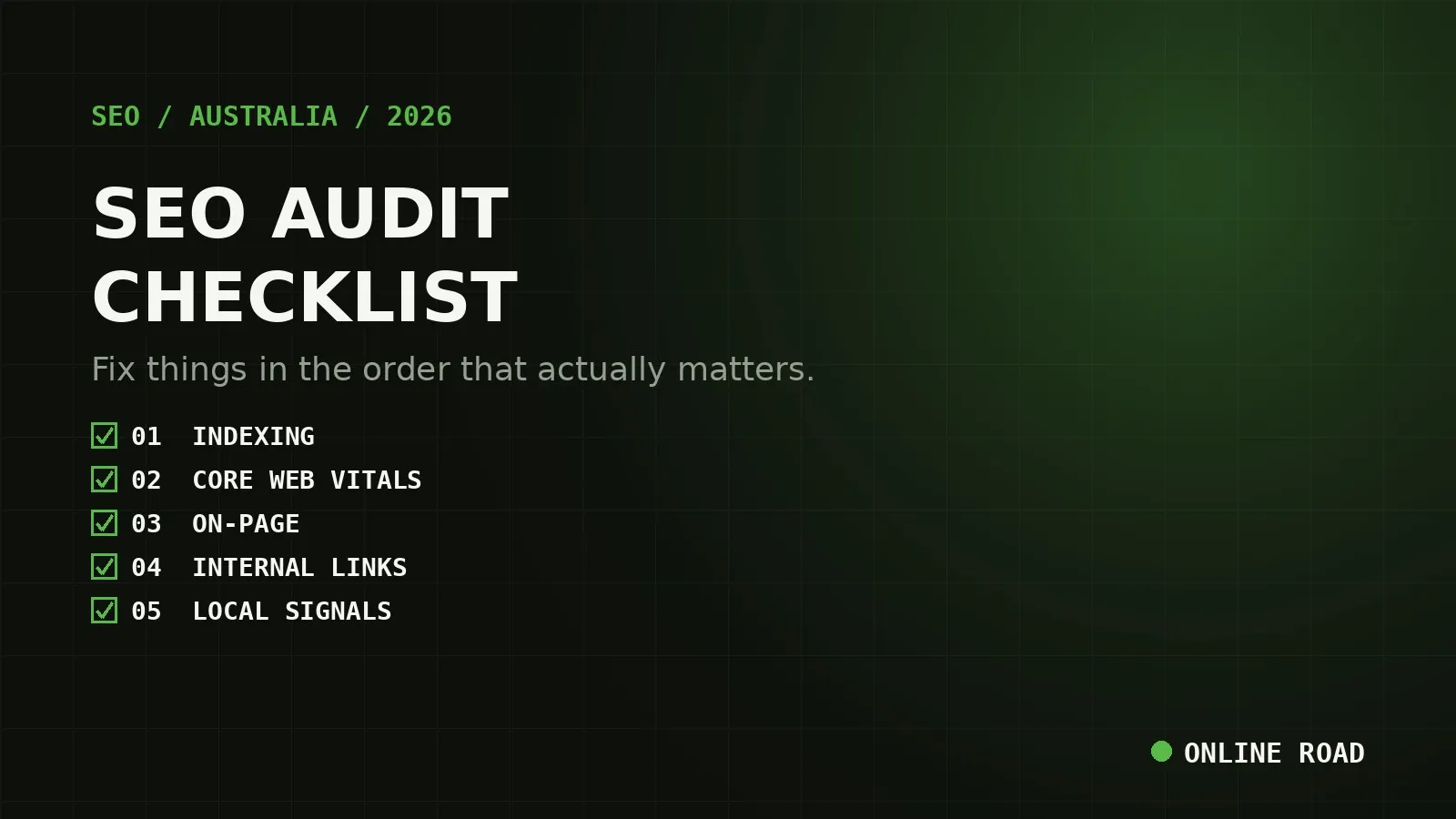
They fix the basics before spending on ads. If your Google Business Profile is incomplete, your NAP (name, address, phone) is inconsistent across the web, or your site is slow on mobile, you are losing trust before a prospect even compares you to a competitor. Our guide on why your Google Business Profile isn’t ranking covers the most common gaps we see, and they are frequently cheaper to fix than the next ad dollar is to spend.
They measure against real enquiries, not traffic. With a smaller, slower-growing pool of searchers, wasted spend is more costly proportionally than it is in a bigger city. Clean conversion tracking from day one means every dollar either proves itself or gets reallocated quickly, rather than quietly leaking into traffic that was never going to convert.
The bottom line
Adelaide is a genuinely good place to run a business right now: business conditions are strong, and the state government is actively backing small business growth. What is different is the demand side. With population growth sitting under 1% a year, you are not going to out-market your competitors by simply being visible to a flood of new searchers the way a business in Perth or Brisbane can. You win by being the most trusted, most locally specific, most consistently reviewed option in your category, and by capturing the switchers rather than waiting for newcomers who are not arriving at the same rate.
Get your Google Business Profile and reviews genuinely strong, build tight local SEO around your actual service area, and use Google Ads to catch people actively comparing. That order matters more in Adelaide than in a faster-growing city, because here, trust is most of the job.
If you would like a clear plan for your business, book a free strategy call or see how we approach digital marketing in Adelaide across the wider metro area. If you are also weighing up where your marketing budget should go first, our guide to how much SEO costs in Australia is a good next read.