How Long Does SEO Take to Work? An Honest Australian Timeline
“How long until I see results?” is the first question almost every business owner asks about SEO, and it is a fair one. The honest answer is that most Australian businesses see early movement within one to three months, real traffic and lead growth around four to six months, and results that genuinely compound from six to twelve months onward. There is no single switch-on date, because your timeline depends on where you are starting, how competitive your market is, and how consistently the work actually gets done.
This guide gives you the honest version: what happens each month, what moves first, and why SEO behaves the way it does. If you understand the shape of the curve, you can judge whether your SEO is on track instead of pulling the plug three weeks in.
Why SEO is not instant (and why that is actually good)
The reason SEO takes time comes down to how Google works. With Google Ads, you pay and you appear, instantly. With SEO, you are asking Google to decide that your page is the best answer to a search, and it will only decide that after it has crawled your changes, re-assessed your site against everyone else competing for that term, and watched how real searchers behave when they see you.
That loop, crawl, assess, observe, repeat, plays out over weeks and months, not minutes. It is slower, but it is also why SEO is worth doing. Ads stop the moment you stop paying. A page that earns its ranking keeps bringing in traffic long after the work is done, which is why SEO tends to lower your blended cost per lead over time rather than raising it.
Three things set your personal timeline more than anything else:
- Your starting point. A five-year-old site with existing authority moves faster than a brand new domain with no history.
- Your competition. “Plumber in a small regional town” is a different race from “SEO agency Sydney”. More competition means more time.
- Your consistency. SEO done every month compounds. SEO done in bursts, then ignored, resets its own momentum.
A realistic month-by-month SEO timeline
Every site is different, so treat this as the shape of the curve rather than a promise of exact dates. It assumes steady, competent work on a typical Australian small-to-medium business site.
Month 1: foundation and diagnosis
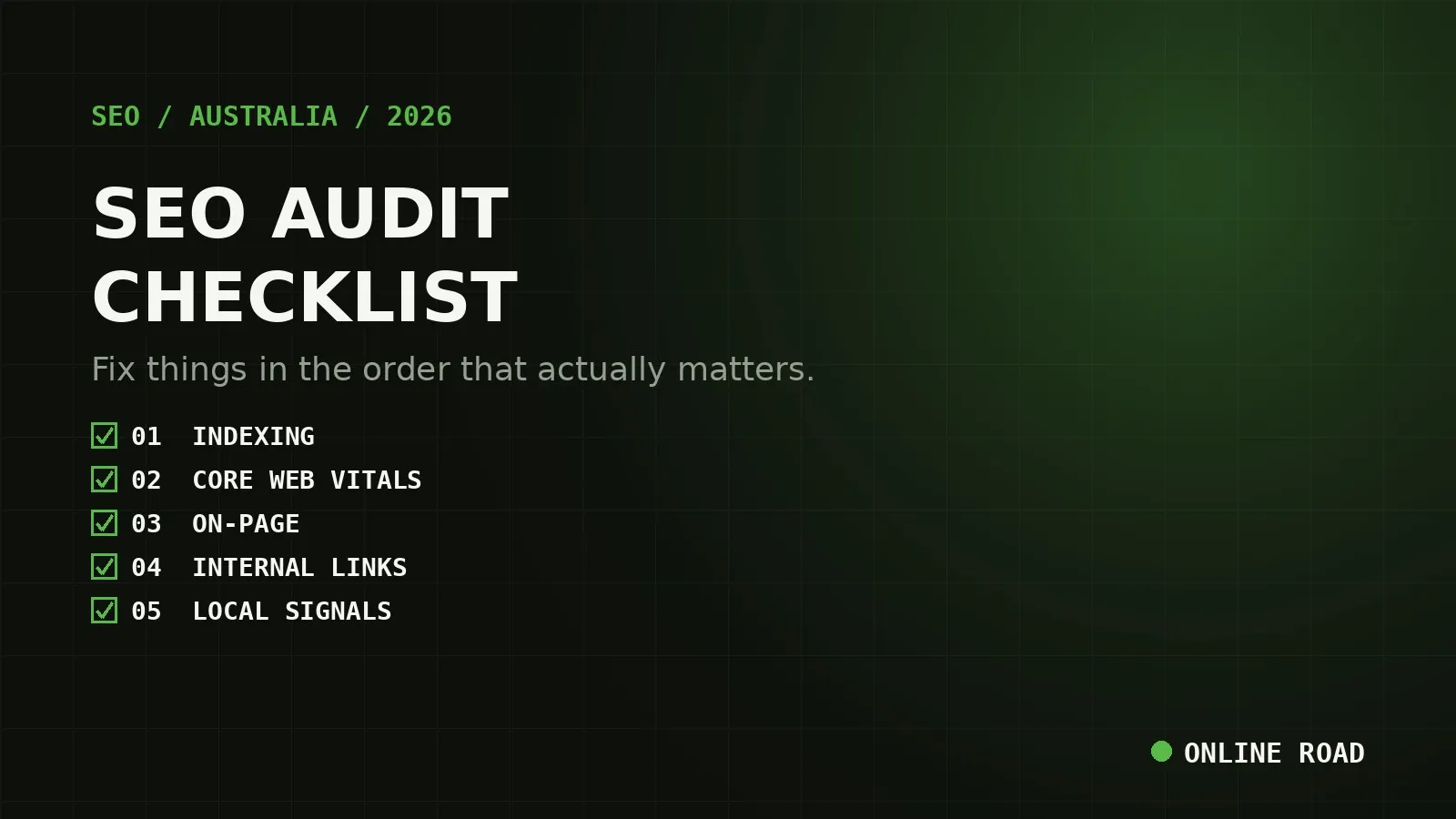
The first month usually looks quiet from the outside, and that is normal. This is where the highest-leverage work happens: a full technical and content audit, fixing anything blocking Google from crawling or indexing pages, improving the most important commercial pages, sorting out internal linking, and setting up proper tracking so results can actually be measured. A structured SEO audit is what turns “we think these things are wrong” into a ranked list of what to fix first.
You will rarely see ranking jumps in month one. What you should see is a clear plan and the groundwork that everything else builds on. Skipping this stage to “just start ranking faster” is the single most common reason SEO stalls later.
Months 2 to 3: early signals
This is where the first genuine movement shows up. As Google re-crawls the improved pages, you typically see keywords that were sitting on page three or four start creeping toward the bottom of page one, longer and lower-competition search terms begin bringing in a trickle of traffic, and local businesses often see early local SEO and map-pack movement for specific suburbs.
It is early, and it can be uneven. One week a term jumps ten spots, the next it settles back a few. That volatility is normal while Google works out where you belong. The trend line matters far more than any single week.
Months 4 to 6: momentum and leads
By this point, if the work has been consistent, the picture changes from “rankings moving” to “traffic and enquiries growing”. More of your target keywords reach page one, the content you have published starts ranking and supporting your money pages, and, crucially, the traffic starts turning into real leads rather than just visits.
This is the stage where most businesses first feel SEO working in the part of the business that matters: the phone, the inbox, the booking form. It is also the point where the compounding starts to become visible, because each ranking page makes it easier for the next one to rank.
Months 6 to 12: compounding
From around six months, good SEO stops feeling like pushing and starts feeling like momentum. Your site has built topical authority, your best pages hold their rankings and climb for more competitive terms, and new content ranks faster because the domain has earned trust. The gap between you and competitors who started later widens on its own.
This is the payoff SEO is built for. Businesses like Austip Recycling grew organic traffic substantially precisely because the foundations were right and the work kept compounding, rather than being switched on and off.
What moves first, and what takes longest
Not all rankings move at the same speed. In rough order:
- Fastest: your Google Business Profile and map-pack presence, low-competition long-tail terms, and pages you already ranked for on page two that just needed a push.
- Middle: competitive local terms (a service plus a city), category and service pages once they are properly optimised and linked.
- Slowest: high-competition national head terms, and anything on a brand new domain with no authority yet.
This is why a smart SEO plan goes after the quick wins early to build momentum and prove the approach, while working on the bigger, slower terms in the background.
The honest caveats
A few things genuinely stretch the timeline, and you deserve to hear them up front:
- A brand new domain has no track record with Google, so it starts slower than an established site.
- A technical mess (pages Google cannot index, a slow site, broken structure) will cap results until it is fixed, no matter how good the content is.
- A very competitive industry means the businesses above you are also investing, so overtaking them takes longer.
- Stop-start work is the quiet killer. SEO rewards consistency, and a site that is worked hard one month and ignored the next never builds the momentum that makes month nine so much stronger than month three.
None of these mean SEO will not work. They just mean the curve is longer, and knowing that in advance is far better than being surprised by it.
How to tell if your SEO is actually on track
You should not have to wait six months to know whether SEO is working. Within the first couple of months you should see leading indicators moving in the right direction, even before traffic and leads catch up: impressions growing in Google Search Console, more keywords ranked (even on pages two and three), map-pack visibility improving for local terms, and technical health scores climbing.
If those leading indicators are moving, the lagging ones (traffic, leads, revenue) almost always follow. If nothing at all is moving after two to three months of genuine work, that is your signal to dig into why, not to quietly give up.
The bottom line
SEO is a compounding investment, not a switch. Expect groundwork in month one, early signals by months two to three, real lead growth around four to six months, and momentum that keeps building past six months. The businesses that win with SEO are rarely the ones who spent the most; they are the ones who started properly and kept going.
If you want an honest assessment of how long SEO would realistically take for your business, your starting point, your competition and the fastest wins available, book a free strategy call and we will map it out with you. You can also read how much SEO costs in Australia and how to weigh SEO against Google Ads if you are deciding where to start.